TECHSAVVYROBOTICS PROJECTS

Robotics projects offer children a hands-on way to learn science, technology, engineering, and math (STEM) skills. For parents, seeing their children build and program robots can be exciting and rewarding. This post shares some of the past robotics projects created with Quarky kits and other tools, highlighting how these projects help kids develop problem-solving skills, creativity, and teamwork.
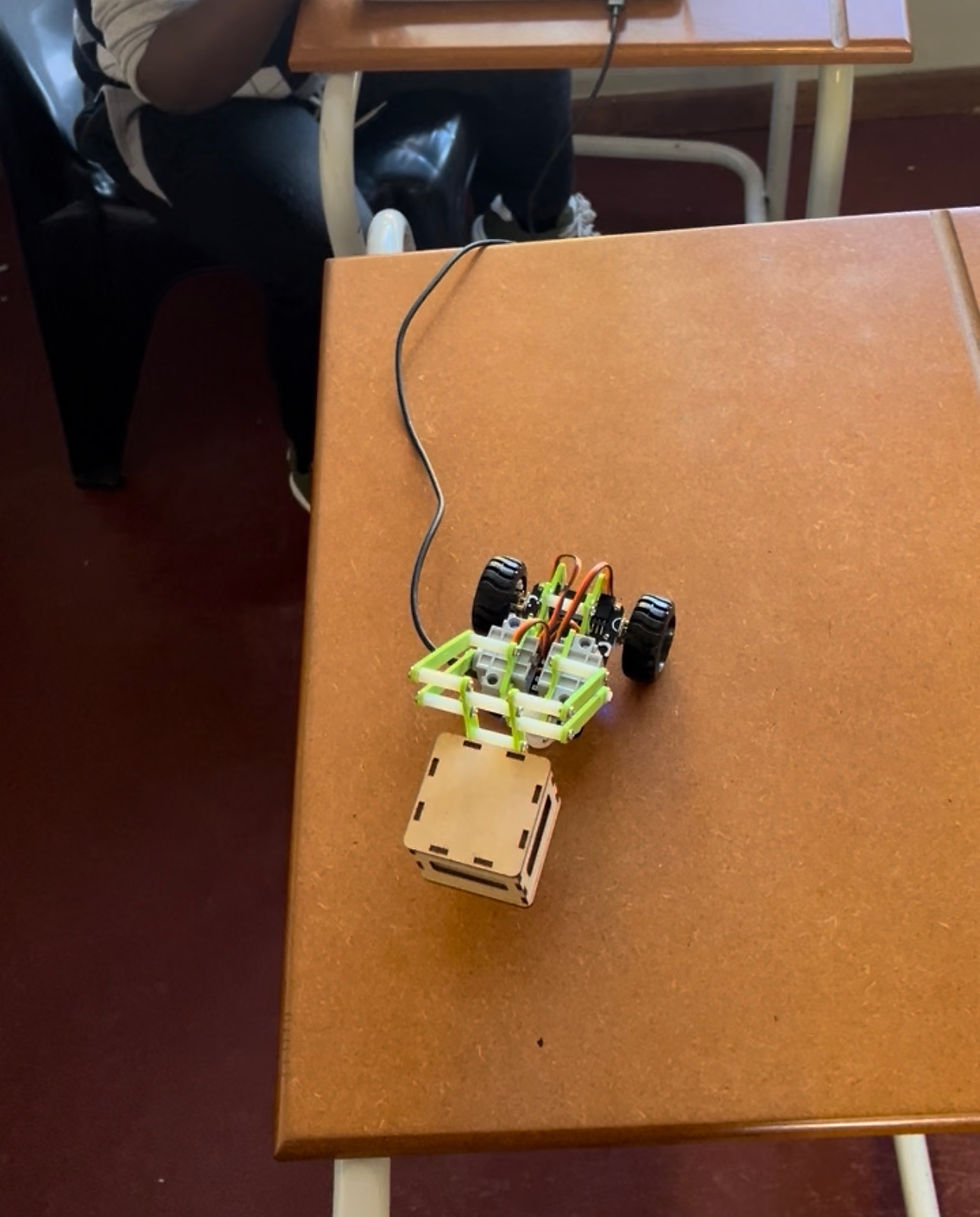
Quarky Robot Pick and Place
One of the first projects involved building a pick and place robot using the Quarky platform. This robot is designed to pick up small objects from one location and place them in another. It uses sensors to detect the object and motors to control the arm movement.
This project teaches children about:
Basic robotics mechanics
Sensor integration
Programming simple automation tasks
Kids enjoy watching their robot complete a task that mimics real-world industrial robots. It also introduces them to the concept of automation and how machines can assist humans in repetitive tasks.

Quarky Robot Gripper
The gripper is a crucial part of any robot that interacts with objects. In this project, children built and programmed a robotic gripper that can open and close to hold items of different sizes.
Key learning points include:
Understanding mechanical design for gripping
Controlling servo motors for precise movement
Experimenting with different materials for the gripper fingers
This project encourages kids to think about how robots can handle delicate or irregular objects, which is important in fields like manufacturing and healthcare.

Quarky Robot Line Following
Line following robots are a classic robotics challenge. Using Quarky, children built a robot that follows a black line on a white surface using infrared sensors.
This project helps children learn:
Sensor calibration and data reading
Writing control algorithms for movement
The basics of feedback loops in robotics
Kids find it fun to design different track shapes and test how well their robot can navigate curves and intersections. It also introduces them to autonomous navigation concepts.

Sumo Robots with Quarky
Sumo robots compete by trying to push each other out of a ring. Using Quarky kits, children built small sumo robots equipped with sensors to detect the opponent and the ring boundary.
This project teaches:
Strategy development for robot movement
Sensor fusion to detect multiple inputs
Real-time decision making in programming
Sumo robot competitions are exciting for kids because they combine robotics with friendly competition. It also encourages teamwork as children often work in pairs to build and program their robots.
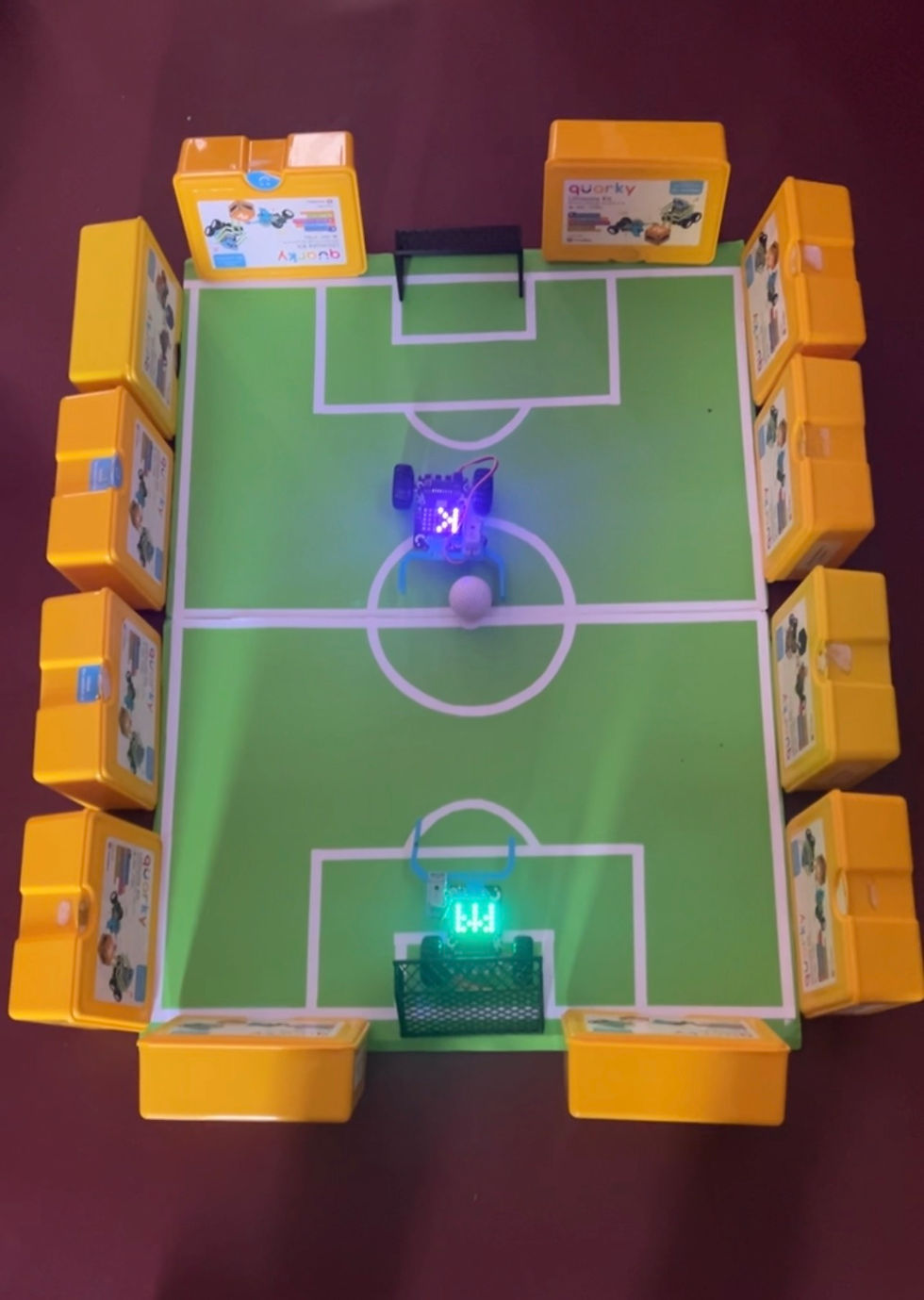
Soccer Robot with Quarky
Building a soccer-playing robot adds complexity by requiring the robot to detect and move a ball towards a goal. Using Quarky, children created robots that can chase a small ball and attempt to score.
Learning outcomes include:
Combining multiple sensors for object detection
Coordinating movement and ball control
Understanding game rules and strategy implementation
This project is engaging because it mixes robotics with sports, making it relatable and fun. It also challenges kids to improve their robot’s speed and accuracy.
Hydraulic 3D Printed Robot Arm
One of the more advanced projects involved building a hydraulic robot arm using 3D printed parts. This arm uses syringes filled with fluid to control movement, mimicking real hydraulic systems.
This project introduces:
Principles of hydraulics and fluid mechanics
3D printing technology and design
Complex control of multiple joints
Children learn how forces can be transferred through liquids to move parts of a robot. This project also sparks interest in engineering design and manufacturing processes.
These projects show how robotics kits like Quarky can provide a rich learning experience for children. They combine building, programming, and problem-solving in ways that keep kids engaged and motivated. For parents, supporting these activities helps children develop skills that will be valuable in school and future careers.
Encouraging your child to explore robotics projects can open doors to creativity and critical thinking. Whether it’s a simple line follower or a hydraulic arm, each project builds confidence and curiosity. Consider joining local robotics clubs or workshops to keep the learning going beyond the classroom.


Comments